Abstract
This study examines instances of political incorrectness in the context of contemporary Pakistani politics. It investigates the strategies employed by certain Pakistani politicians and political activists to advance their political objectives with political incorrectness. The research population consists of individuals from the online community on Twitter, specifically political activists and politicians. The data collection process was conducted by the researchers, ensuring accuracy and reliability and then was carefully examined and analyzed in detail with the help of the three-dimensional model devised by Norman Fairclough (2015). The research methodology used was descriptive and qualitative, focusing on providing a clear understanding of the subject. The findings of the study highlight that utilizing political incorrectness can be an effective means of belittling, ridiculing, and mocking political adversaries. Additionally, it revealed that political incorrectness could sway less educated individuals in the desired direction. This strategy proves to be quite shrewd, allowing political parties to accomplish their desired political objectives by defaming opponents.
Key Words
Political incorrectness, Critical discourse analysis, Twitter, Political discourse
Introduction
Language is a complex and dynamic system that allows individuals to express their thoughts, feelings, and ideas to others. It is a defining characteristic of human beings and is essential for social interaction. If we talk about discourse, it refers to the use of spoken or written language to convey meaning in a particular social context. It encompasses a range of communicative practices, including conversation, debate, argumentation, and storytelling, and is shaped by various factors such as culture, power dynamics, and social norms.
In academic contexts, discourse analysis is a field of study that examines the use of language at the social level and how it forms and reflects social construction and power relations. Discourse analysis can be applied to a wide range of contexts, including politics, media, education, and everyday conversation. Furthermore, the methodology employed in scrutinizing language as a social practice is commonly referred to as Critical Discourse Analysis. As articulated by Van Dijk (1998), Critical Discourse Analysis (CDA) is a discipline devoted to the examination and interpretation of written and spoken texts, with the intention of revealing the origins of power, dominance, inequality, and bias embedded within them. CDA seeks to discern the mechanisms through which these elements are sustained and propagated within particular social, political, and historical frameworks. In simpler terms, CDA aims to critically investigate how social inequality is expressed, communicated, formed and justified through the use of language.
Before jumping to Political Incorrectness, we need to re-look that what is Political Correctness. Political correctness is a phenomenon where moral and religious values are becoming more prominent and often take precedence over broader guidelines and rules governing social behaviour. However, it raises questions about what these guidelines and rules actually are. How are they suggested, developed, adhered to, and enforced by politicians and other individuals in society? Currently, political correctness is deeply ingrained in a specific socio-historical context, namely the political discussions within Western societies. Political correctness can sometimes stigmatize certain values while promoting norms based on the perspectives of specific societies. It leads us to question whether it will develop, and if so, how it will evolve towards a more inclusive and open-minded perspective. The objective of adhering to principles of political correctness is to combat societal biases by limiting language and behaviours that have the potential to cause harm or discrimination to marginalized groups. Advocates of political correctness often draw inspiration from post-modernism and critical theory, and they frequently engage in critical examination of the concept of universal truth and dependency on scientific rationality. On the other hand, our topic of concern is Political Incorrectness is the attitude or policy carried out by someone who intentionally offends or upsets a person or a group of people in a society in order to have an advantage in his own favour. The current Pakistani political unrest is fostering multiple internal and external conflicts. No doubt extremism and intolerance of diversity and dissent have grown.
This paper encompasses a few of the Pakistani Politicians who go on to proceed with their political agendas by launching their 'Political Incorrectness’ approach.
Significance
No doubt modern societies and politics are succumbed to immorality and mortifying attitudes. The extent to which decency and civility are decaying is a worrying point. In these low times, a study has been conducted that investigates emerging wickedness and immorality in Pakistani politics. Moral values indeed have a significant impact on everyone's life. They contribute to leading a respectful and fulfilling existence. Values like honesty, loyalty, respect, empathy, compassion, and courage provide individuals with a sense of positivity and guide their thoughts and actions. Moral values serve as the fundamental building blocks of one's character, helping to distinguish between right and wrong. Moreover, these values are often regarded as universal, as people from diverse cultures and backgrounds generally agree upon them. This study highlights the discourse of political incorrectness in Pakistani Politics. It aims to expose the agendas behind such a degrading discourse. All the factors that incorporate political incorrectness are discussed at great lengths. The driving force behind these factors is also unveiled.
Research Objectives
The research objectives of our study are:
? to highlight political incorrectness in the discourse of Pakistani Politics
? to bring out hidden motives from the discourse infused with political incorrectness.
Research Questions
The following are the research questions of our study:
? What Politically Incorrect statements are being used in Pakistani Politics?
? What is the purpose of political incorrectness in the discourse of Pakistan’s Politics?
Literature Review
There has been a limited number of theoretical or practical work done concerning 'Political Incorrectness' in some political discourse. Jessica Gantt's work 'Donald Trump's "Political Incorrectness": Neoliberalism as Frontstage Racism on Social Media' falls under the category of the best example. The triumph of Donald Trump's campaign for the 2016 United States presidential election went against many traditional beliefs regarding persuasive rhetoric His informal and unconventional style of communication challenged the norms of political discourse (McNair, 2017). Scholars and journalists alike have characterized his communication style as unburdened by the constraints of political correctness (Paulhus, 2017). Trump even deplored the culture of political correctness in the United States by saying, "The US has become so politically correct as a country that we can't even walk. We can't think properly. We can't do any Thing" (Milbank, 2015). According to various sources (Phillips, 2017), right-wing populist movements in Europe have gained popularity by expressing ideas that are considered politically incorrect, particularly when discussing social identity, Islam, and immigration. These movements have found appeal even within intellectual and academic circles, as demonstrated by the rise of the "Intellectual Dark Web" - a group of intellectuals, professors, and journalists who challenge the prevailing political and academic norms on contentious issues (Weiss, 2018). Some studies suggest that this politically incorrect communication may resonate with individuals who perceive it as a display of honesty and authenticity (Schroeder, & Gino, 2018).
The underlying principle behind politically incorrect statements lies in their potential to contribute to the establishment of a reputation characterized by unabashed honesty, intellectual bravery, and moral uprightness. However, it is unscientific to draw causal connections based solely on a limited set of observations and the benefit of hindsight. Adhering to the avoidance of expressing politically incorrect views can provide leaders with a kind of reputational advantage (Van Boven, 2000). Nevertheless, if followers are aware of societal norms that discourage the expression of such views, a leader's politically correct statements might not effectively convince sceptical followers of their true values. Therefore, it becomes crucial for building trust in leadership that followers possess knowledge of a leader's privately held convictions.
Within the field of communication research, the repercussions of verbal aggression have been extensively scrutinized (Avtgis, 2006). Studies conducted by Cole and McCroskey (2003) have illustrated a correlation between the source of verbal aggression and how recipients evaluate the credibility and appeal of said source, both in a supervisor-follower setting and in informal interactions. Similarly, Infante et al. (1992) discovered that individuals initiating verbal aggression during one-on-one conversations were perceived as less credible and attributed fewer valid arguments.
Furthermore, when a politically incorrect leader possesses values that contradict those of their employees, it can have a negative impact on their perception of the leader's integrity. However, while employees may disagree with the politically incorrect leader's values, they are less likely to suspect the leader of deliberately misrepresenting their convictions. Expressing politically incorrect opinions may alleviate suspicions of deceit, similar to revelations about immoral behaviour. When immoral behaviour is denied, onlookers often suspect dishonesty, whereas admitting to such behaviour leads to fewer suspicions of deception. A similar pattern may apply to political incorrectness. By openly acknowledging the possession of politically incorrect opinions, leaders may signal an unwavering commitment to forthrightness and veracity (Morris, 2001). This signalling of truthfulness can positively impact how the leader's integrity is perceived, particularly regarding the alignment between privately held and publicly expressed attitudes and values. In simpler terms, leaders who make politically incorrect statements may earn a reputation for "walking the talk," "saying what they mean and meaning what they say," and being a "straight shooter" - attributes that leaders expressing politically correct views may find challenging to achieve (Ishida, 2015).
If political incorrectness leads to an increase in perceived trustworthiness, it can serve as a delicate yet valuable tool for managerial communication. Some scholars argue that leaders deeply entrenched in political correctness may risk losing the trust of their followers. Ely, Meyerson, and Davidson (2006) contend that political correctness can create an environment in which people cautiously navigate sensitive issues and each other, resulting in misunderstandings, conflicts, and mistrust that ultimately undermine both managerial effectiveness and team dynamics.
Research Methodology
The data was thoroughly analyzed and described with detailed descriptions in this study, which uses a descriptive and qualitative research methodology.
Target Population
This study is conducted on the material piled up from Twitter posts on political and public profiles having political discourse by the researcher itself. Social media has formed a virtual community where groups and profiles are formed on multiple ideas and common interests i.e., religious, political, social, etc., sharing no geographical boundaries. The population for this research is drawn from the online community and includes political activists and politicians.
Sampling
The non-probability sampling method is used in which each and every member does not have an equal chance to be selected. The data collection procedure from social media icons is random and data is collected manually in the form of images and screenshots from the tweets of users. Authentic data is collected for the analysis which is counter-verified via self-assessment.
Theoretical Framework
In the context of this study, the Fairclough 3D Modal, developed by Fairclough, is utilized. This model offers a comprehensive approach to analyzing discourse by incorporating three dimensions of understanding.
According to Fairclough, discourse can be viewed through three interconnected dimensions. First, it is seen as a language text, whether it is spoken or written. This dimension involves studying the linguistic aspects of the discourse, such as grammar, vocabulary, and rhetorical devices.
The second dimension emphasizes discourse as a practice that encompasses the production and interpretation of texts. This dimension focuses on understanding how discourse is created, circulated, and understood within specific contexts. It examines the social and cultural implications involved in the use and interpretation of discourse.
The third dimension regards discourse as a sociocultural practice. It acknowledges that discourse does not exist in isolation but is deeply embedded within broader sociocultural structures and practices. This dimension encourages an analysis of how linguistic practices reflect and influence social power dynamics, ideologies, and social norms.
Moreover, Fairclough suggests that discourse can be observed within various sociocultural practices at personal, institutional, and societal levels. This implies that discourse analysis can extend beyond individual conversations or texts and also explore broader social, institutional, and cultural contexts.
By employing the Fairclough 3D Modal, researchers can gain a deeper understanding of discourse, its linguistic elements, its production and interpretation practices, and its wider sociocultural implications. This approach allows for a comprehensive analysis of discourse that uncovers power relationships, ideologies, and societal norms that underlie and are shaped by language use.
Analysis of Data
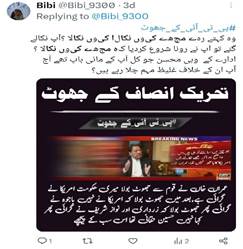
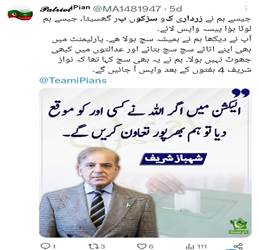
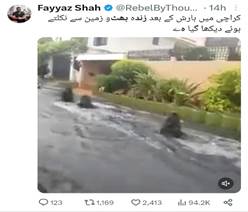
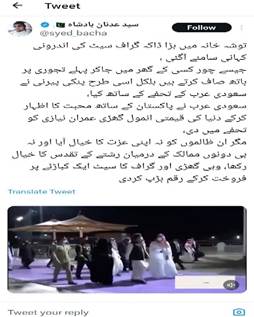
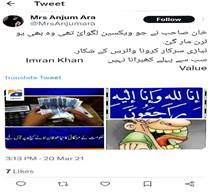
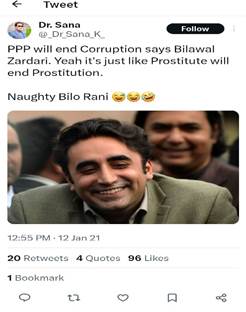
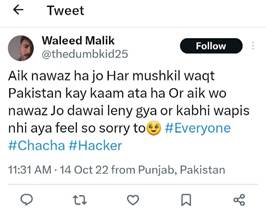
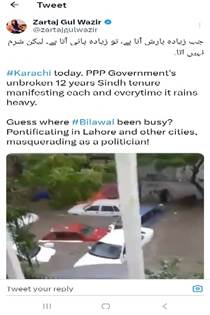
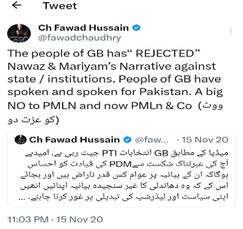
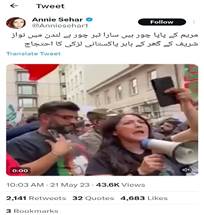
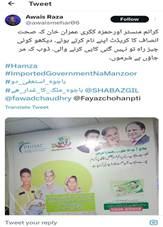
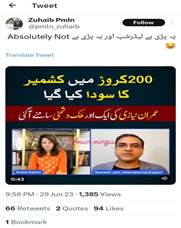
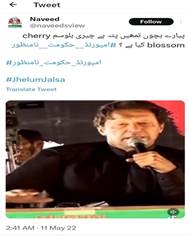
Data has been analyzed with the title of excerpts using Fairclough 3D Modal as follows:
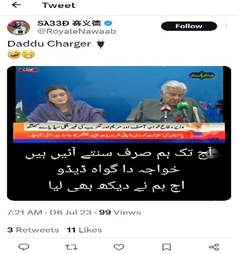
Excerpt 1 (????? ????)
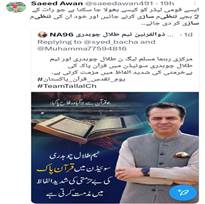
The account that made the comment belongs to Saeed Awan, who is a political activist. He was trolling a politician in his tweet without caring about the Holy Book. This shows his lack of political correctness and reminds us of his past actions. This tweet has not only harmed the individual involved but also reflects poorly on the respected political party. It is a morally reprehensible act, and such tactics should never be used in a democratic political system.


Excerpt 7 (????? ????)

Excerpt 8(???? ?????)

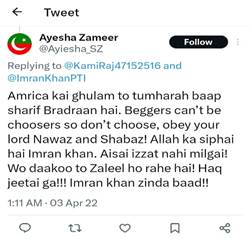
Excerpt 9 (Beggers can’t be Choosers)

Excerpt 10(???? ????)

Excerpt 11 (?? ?? ????? ???? ??? ???)

Excerpt 12 ((??? ?????

Excerpt 13 (?? ????? ???? ???? ?? ?? ????? ???? ???? ??)

Excerpt 14 (??? ?? ??? ??)

Excerpt 15 (???? ?? ???? ???)

Excerpt 16 (???? ????)

Excerpt 17 (????? ???)

The Twitter handle with the name Ihatasham is solidifying the tradition of attacking the personalities of politicians. His political bias can be discerned from this tweet. Political workers like Ihatasham exhibit a lack of education and proper manners. This not only reflects poorly on them but also on our nation as a whole. A country where every politician is subjected to ridicule is a country where moral degradation will prevail.
Excerpt 18(????????? ???)

Excerpt 19 (???? ?????)

Conclusion
Political incorrectness refers to the attitude or policy of someone who demonstrates a lack of concern about potentially offending or upsetting groups of people in society who may have experienced disadvantage or discrimination based on their sex, gender, race, or disability. When a person's language is perceived as politically correct or incorrect, it can influence the overall perception of that individual. It is important to note that political incorrectness often involves language or actions that go against prevailing norms of sensitivity and inclusiveness. Political incorrectness is a wonderful weapon tool to degrade, mock and ridicule political opponents. It directs the uneducated folk in whichever direction one wants. It enables a political setup to achieve political gain. It is used in the political domains of Pakistani politics through which politicians do propaganda for their desired cause.
Findings of the Study
? The study reveals that political incorrectness is an excellent tool to degrade, mock and ridicule political opponents.
? It also brought out that political incorrectness directs the uneducated folk in whichever direction one wants.
? Political incorrectness is a very clever technique which enables a political setup to achieve political gain.
? Political incorrectness is used in the political domains of Pakistani politics through which politicians do propaganda for their desired cause.
Discussion
It has been observed that political incorrectness can be used as a powerful tool to discredit one's, political opponents. In Pakistani society, the decline in moral values is a topic often discussed and commented upon. Moral values are concerned with distinguishing right from wrong in human behaviour. Moral decay, therefore, refers to a decline in the understanding of this difference. It represents a deterioration or collapse in upholding societal values, beliefs, norms, and ethical standards. Morality plays a crucial role in shaping individuals' ethical foundations, influencing their choices between good and evil, honesty and deceit. When discussing the application of morality, four aspects are often considered: religious morality, morality in relation to nature, individual morality, and social morality.
The clever use of language in political incorrectness also appeals to the uneducated population. This technique is particularly appealing and often leads the common man to fall into its trap, affecting their voting decisions. Emphasizing education is critical because illiteracy provides fertile ground for corrupt politicians who exploit affiliations and clan systems to secure votes instead of focusing on their contributions to the nation.
Public awareness is closely linked to education. The mass media in Pakistan has made significant progress in recent years, playing a vital role in keeping the public informed and subjecting the ruling class to scrutiny and accountability. However, there is still room for improvement. Certain sections of the media cater to the interests of a select few, influencing people's opinions and leading to biased viewpoints. With elections on the horizon, the role of the media becomes paramount. Given that a significant portion of the population is uneducated, the mass media holds considerable influence over the voting decisions of the public. It is crucial for the media to present unbiased opinions through print and television programs to enable the public to make informed choices.
Political incorrectness has brainwashed the people. It has built a narrative that is likely to run for a long time. Political propaganda is harmful because it produces emotional responses, threats and attacks on political opponents, or spreads messages that create division among social groups in a community.
Recommendation for Future Researchers
It is recommended for future researchers to grope the history of political incorrectness in Pakistani Politics and its effects on different generations.
Limitation and Delimitations
The limitation of this research is that there has not been a great amount of theoretical work published on Political Incorrectness in politics. Another limitation might be the fake Twitter accounts that have been used by political activists.
The major delimitation is that it has only to do with the present politics of Pakistan.

References
- Cass, R. (2015) Political Incorrectness. Bloomberg.
- Morris, S. (2001). Political Correctness. Journal of Political Economy, 109(2), 231– 265.
- Moss, J., & O’Connor, P. J. (2020). Political correctness and the alt-right: The development of extreme political attitudes. PLOS ONE, 15(10), e0239259.
- Chen, C.-H., & Ishida, J. (2015). Careerist experts and political incorrectness. Journal of Economic Behavior & Organization, 120, 1–18.
- Rosenblum, M. G., Schroeder, J., & Gino, F. (2020). Tell it like it is: When politically incorrect language promotes authenticity. Journal of Personality and Social Psychology, 119(1), 75–103.
- Van Zant, A. B., & Berger, J. (2020). How the voice persuades. Journal of Personality and Social Psychology, 118(4), 661–682.
- Wilson, J. P., & Rule, N. O. (2014). Perceptions of Others’ Political Affiliation Are Moderated by Individual Perceivers’ Own Political Attitudes. PLoS ONE, 9(4), e95431.
- Westfall, J., Van Boven, L., Chambers, J. R., & Judd, C. M. (2015). Perceiving Political Polarization in the United States. Perspectives on Psychological Science, 10(2), 145–158.
- De Bruin, D., van Baar, J. M., RodrÃguez, P. L., & FeldmanHall, O. (2023). Shared neural representations and temporal segmentation of political content predict ideological similarity. Science Advances, 9(5).
- Koopman, J., Lanaj, K., Lee, Y. H., Alterman, V., Bradley, C., & Stoverink, A. C. (2023). Walking on eggshells: A self-control perspective on workplace political correctness. Journal of Applied Psychology, 108(3), 425–445.
- Gonnot, J., & Seabright, P. (2021). Establishment and outsiders: can political incorrectness and social extremism work as a signal of Commitment to populist policies? Cadmus.eui.eu. h
- Bernstein, R. (1990, October 28). Ideas and trends; the rising hegemony of the politically correct. The New York Times. l
- Shafer, J. A. (2017). Donald Trump’s “Political Incorrectnessâ€: Neoliberalism as frontstage racism on social media. Social Media and Society, 3(3), 205630511773322.
- Travers, M. (2019). In New Research, Psychologists Explore The Upside Of Political Incorrectness. Forbes.
- Sgorbati, B. (2021). Political Correctness and the Law. Undecidabilities and Law, 1, 147–160.
- Theodore, D. (2019). False Positive: A Year of Error, Omission, and Political Correctness. Manhattan Institute.
- Hollander, P. (2013). Peer review, political correctness, and human nature. Academic Questions, 26(2), 148+.
- Livni, E. (2019). Politically incorrect speech can be good politics. QUARTZ.
- Neumann, F. W. (2003) The Poet of Political Incorrectness:Larkin's Satirical Stance on the Sexual-Cultural Revolution of the 1960s. GRO Publications
Cite this article
-
APA : Abbas, A., Khan, M. A., & Tabassum, A. (2023). A Critical Evaluation of Political Incorrectness in Pakistani Political Discourse. Global Language Review, VIII(II), 368-381. https://doi.org/10.31703/glr.2023(VIII-II).30
-
CHICAGO : Abbas, Ali, Muhammad Akbar Khan, and Aleesha Tabassum. 2023. "A Critical Evaluation of Political Incorrectness in Pakistani Political Discourse." Global Language Review, VIII (II): 368-381 doi: 10.31703/glr.2023(VIII-II).30
-
HARVARD : ABBAS, A., KHAN, M. A. & TABASSUM, A. 2023. A Critical Evaluation of Political Incorrectness in Pakistani Political Discourse. Global Language Review, VIII, 368-381.
-
MHRA : Abbas, Ali, Muhammad Akbar Khan, and Aleesha Tabassum. 2023. "A Critical Evaluation of Political Incorrectness in Pakistani Political Discourse." Global Language Review, VIII: 368-381
-
MLA : Abbas, Ali, Muhammad Akbar Khan, and Aleesha Tabassum. "A Critical Evaluation of Political Incorrectness in Pakistani Political Discourse." Global Language Review, VIII.II (2023): 368-381 Print.
-
OXFORD : Abbas, Ali, Khan, Muhammad Akbar, and Tabassum, Aleesha (2023), "A Critical Evaluation of Political Incorrectness in Pakistani Political Discourse", Global Language Review, VIII (II), 368-381
-
TURABIAN : Abbas, Ali, Muhammad Akbar Khan, and Aleesha Tabassum. "A Critical Evaluation of Political Incorrectness in Pakistani Political Discourse." Global Language Review VIII, no. II (2023): 368-381. https://doi.org/10.31703/glr.2023(VIII-II).30